Categories
News Technology

Satellite Internet vs Fiber Internet – Which is better?

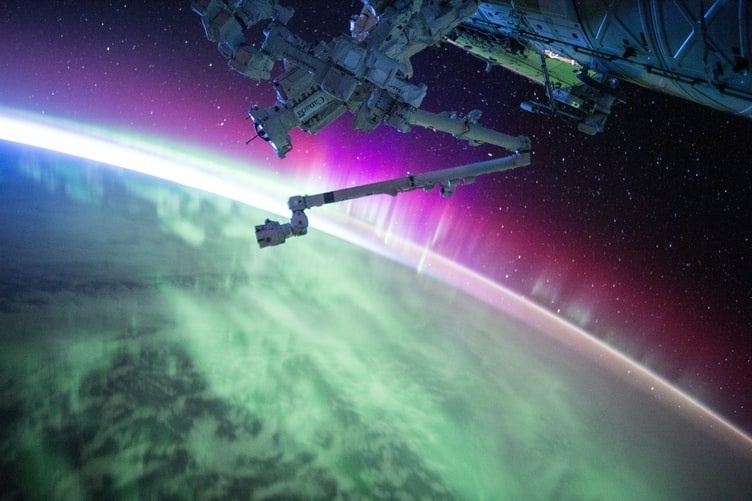
Photo by NASA on Unsplash

Written by: Gab Angeles

The internet has started to become a necessity and commodity, rather than being the luxury it once was. Hence, the search for the best internet service providers that give great data allowance, internet access, and overall internet service proves as a key aspect for everyday survival.

Now, users are yearning for fast internet speeds, no data caps, great internet plans, and vast coverage (even making sure to take on most rural areas). Wi-Fi taken into consideration, the argument seems to boil down between two things. Are you going to avail the internet provider with satellite internet service? Or shall you choose the one with fiber internet?

Broadband speeds, area of service, and data allowance for data cap taken into consideration, what is the better option for choosing among internet providers? Let’s find out.

Choosing the perfect internet plans for you

The crucial part in choosing your preferred service to rent when it comes to internet plans is location. You’ll choose among which service providers are able to give the best possible internet service in several locations.

Considerations for Internet Options: Location, Data Allowance, Speeds

Most urban areas usually have no problem since they’re the most up-to-date. But some rural areas may find themselves having trouble with internet providers reaching them for viable and proper internet service.

Of course, what’s the use of getting your household a subpar internet service with prices close to gold? It feels pretty short-sighted, especially if you use the internet data for streaming videos, gaming, and connecting with people.

That’s why it’s vital for you to weigh and measure the benefits and capabilities of internet plans offered by your ISP. Make sure they work well in your area, have nearby ground stations for easier cable routing, and have speeds, data, and plans that fit your needs.

Of course, dial-up internet service is not up for debate. They prove to be quite obsolete and fairly incapable to match up to the speed of the DSL internet that most modern ISP provides. Circling back to internet-fiber and internet-satellite, it’s vital that we know how the technology behind the service works.

How do these types of high-speed internet works?

Even though both deemed as fast connections, there are still differences on how both of these types of connection works.

Fiber internet, the one with unlimited data

First off, fiber internet makes use of fiber optic cables in delivering a proper and high-speed internet connection. These cables are flexible, transparent, and either made of glass or plastic, making them hard to see within line of sight since they need to be protected.

They transfer your data as coded beams of light. This easily turns the slower copper wiring obsolete, and something that should be used as a mineral to enrich the earth instead. Modern internet service providers offer this fiber cable internet option already. Proof of this is the DSL modem that is fiber-ready, given by your ISP.

Subscribe to Streamtech Fiber Internet

The satellite internet system

The satellite internet system, on the other hand, makes use of satellite providers in outer space to connect with satellite internet service providers. They employ out-of-this-earth machinery called satellites.

These send signals from outer space to a satellite dish capable of making use of satellite connections to become internet providers. The satellite dish is then hooked up to a DSL modem that will provide internet to the entire household, thanks to the power of wi-fi.

The downside of satellite internet service and problems of service providers

The only disadvantage of this connection is the large space the satellite dish will take on your roof and backyard. Certainly, this leads to satellite internet providers having a hard time offering cheaper satellite internet plans and satellite service.

Internet signal will prove not to be a problem, as satellite internet access is readily available as long as the satellite is working in outer space and the satellite dish is working from within the household. If the internet signal is poor, then there must be a problem with the satellite internet service. And for sure, satellite internet providers are scurrying to look for a fast solution.

Making sure that there are more satellites than subscribers down the Earth, and ensuring the proper position of the satellite dish can alleviate this problem.

Why does the best satellite internet work still can’t beat conventional ones?

But not for anything, satellite internet is still far from beating DSL technology. Even the best internet service providers out there face the handicap of soaring fees and dues. The higher the speeds and data allowance in a satellite internet plan, the higher the costs.

But costs aside, which of the two is faster?

The battle of internet speed

internet speed - satellite internet - streamtech fiber internet
Photo by Aew on rawpixel

Satellite internet speed

The thing about using satellites as the internet is that there could be a lot of interferences. Since signal travels from outer space and into the dish installed on your home, it may be against the DSL systems. Hence, populated areas easily give satellite internet providers a run for their money.

There is higher latency and lack of speed, making it hard to use for streaming videos, conference calls, and even gaming.

This gives satellite internet providers a competitive edge to put out a satellite internet plan that mostly focuses on giving out more data. This is to compensate for the lack of speed that satellites are unable to provide for a better internet connection.

If anything, satellite internet is perfect for activities that do not require much bandwidth. These include clerical work and casual use. The best satellite internet out there undeniably still can’t stand against the performance of DSL speeds and data transfer.

More so, DSL options still look more tempting to give in to than that of the satellites’.

Fiber internet speed

On the other hand, there’s fiber internet that’s more than capable of providing great internet speed. Fibre internet is perfect for people looking for high bandwidth. The service is more than capable of providing top-notch speeds and data transfer, as needed.

Gaming and streaming simultaneously would be a cinch. The only limiting factor to take into consideration is the type of package and plan that you’re choosing from the internet service provider. If the speed is there, how reliable are they when it comes to functioning?

The case of overall reliability

reliability - satellite internet - streamtech fiber internet
Photo by Aum on rawpixel

With satellite internet, one can easily say that it isn’t the best in delivering strong signals. There is a lot of interference from outer space up to one’s home. The speeds definitely aren’t there compared to fiber and DSL.

Harsh weather conditions and general signal interference within an urban community may prove to be quite nerve-wracking for someone trying to make the most out of their internet connection. Obstructions are also imminent from within the proximity of the receiving satellite internet dish, with trees and buildings affecting the performance, data transfer, and speeds of a satellite internet connection that you may have availed.

However, so long as you’ve kept the satellite dish intact after a disaster, you can still connect through satellite internet.

Contrary, fiber internet, has most of the wiring done underground. This makes sure that speeds and data transfer will never be disturbed by weather or obstructions–only system maintenance!

The performance will always stay top-notch for fiber, with speeds that would easily outperform satellite internet any day of the year.

Reliable as it may seem, how easily available are these technologies against one another?

The availability conundrum
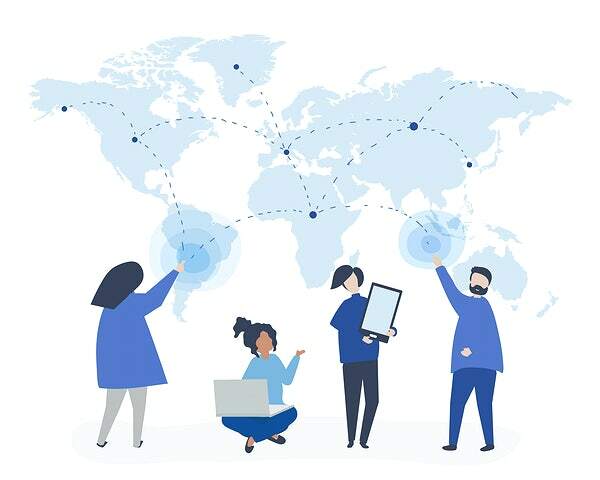
Availability - satellite internet - streamtech fiber internet
Photo by filmful on rawpixel

The thing about satellite internet is that it can be availed of anywhere. Truly, it does not require any cable or wiring – just a satellite internet dish. As long as there’s a satellite in outer space ready to throw signal your way, you’re good to go!

Satellite internet is mostly apt for places with clear skies – making sure you get the best speeds and data transfer rates possible. You’d even be surprised as some remote areas tend to perform better than an urban location. This is because there is less interference and objects blocking the signal from outer space.

On the contrary, fiber internet proves to be too limiting compared to satellite. Areas that can avail it are usually the ones that the underground wiring can reach in their best effort.

Of course, internet service providers have been trying their best in providing everyone with great internet speeds and reliable connections.

That’s why some internet service providers do manage to reach and branch out to remote areas. This is to help small local businesses and people looking to scale up their lifestyle with a faster internet connection. But how much would it hurt your wallet?

Everything has a cost (apparently)

costs - satellite internet - streamtech fiber internet
Photo by Wan on rawpixel

The biggest downside of satellite internet is the pricing, especially since having a satellite moving around in outer space is expensive. Addedly, there’s also a satellite dish needed to be installed on every place that the service is provided to.

The speeds don’t even fare that well comparatively, not to mention the fact that the service gets more expensive once you try to increase signal strength.

So if you’re looking for an affordable internet option that plays well when it comes to speeds and gives proper ROI, this just might not be it.

For fiber internet, it’s usually the most affordable option considering the speed they can provide vis a vis the price they’re asking for.

The cool thing about fiber internet options is that they’re usually tiered, allowing for people to only subscribe to certain speeds of their liking. Understandably, paying for 20 Mbps worth of speed for a two-person household may not be all that good of an investment.

So, some ISPs tend to offer plans with either faster or slower speeds to make it seem as if it’s bespoke to a given subscriber. It’s a perfect payoff for someone that needs high bandwidth but does not regularly use the service, making it an apt plan to subscribe to as needed.

Satellite internet vs fiber internet: The verdict

Overall, there’s no right or wrong answer when one is asked if satellite internet is better than a fiber one or vice versa. Ultimately, it depends on how you’d use it, what you’d need, where’d you use it for, and where you’d be using it.

Just by looking at the numbers, one can easily say that fiber outperforms satellite internet by a far stretch. But do understand that fiber is not a readily available service unlike that of the breadth and reach of a satellite internet service.

At the end of the day, availability will easily trump performance when push comes to shove. So, at least now you’re well aware of the consequences and trade-offs of one type of internet service from another.

Get Streamtech’s fiber internet
Connect with Streamtech Fiber Internet now

Of course, not everyone would be able to get their hands on a satellite internet connection. Not every network operations center will always have a satellite dish for them to become satellite internet providers.

So if you live in a place where cables could reach your area, fiber internet is your best bet.

For fast and reliable fiber internet options, Streamtech is one of the best internet service providers. It offers services to a wide coverage area.

Our Streamtech Services

More so, Streamtech just might be your solution for high-speed internet access. For as low as PhP 1,499, you can already get up to 25 Mbps fiber internet. You can also spread the high-speed signal to every corner of your home, with our Extendifi Wifi Extender.

We also offer dedicated internet access and customer support for SMEs and huge enterprises. This is to energize their thriving businesses.

Recently, we also introduced SAM, short for Support and Assistance Mate, which is a Viber SuperBot. This connects anyone to Streamtech, wherever you are and whenever you need.

Not all internet providers can give outstanding service and customer satisfaction. But with Streamtech’s commitment to give every Filipino access to an upgraded connection, we are continuously improving our services.

From unlimited data, large areas of coverage (rural areas included), and astounding wi-fi performance, Streamtech raises the bar of internet service.

We have highly competitive plans and promos that are waiting for you to avail of them.

Subscribe now and let Streamtech totally change the internet service game for you for the better!

For more details, visit the Streamtech website or Official Facebook Page.

Categories
News Technology

What is the difference between WiFi and Internet?

Photo by Paul Hanaoka on Unsplash

Wireless networking is very popular nowadays. With the latest technologies and increased Internet speeds, it is more convenient to access the Internet wirelessly. This is through a wireless adapter. WiFi and the Internet may seem like the same thing since they both relate to accessing the Internet. But there are some significant differences that you need to know.

Many people are not aware of the difference between Wi-Fi and Internet. They often ask to get one when they need another. This article is very useful for those who need to be clarified about these two terms.

What is Wi Fi and a Wi Fi network?

The wireless technology that connects computers, tablets, cellphones, and other devices to the Internet is WiFi. It is a radio signal transmitted from a wireless router to a nearby device. Then, it converts the signal into data, the one we see and use.

The router, which connects to the Internet by wire or cable, receives radio signals from the device. WiFi has become a buzzword for wireless Internet. The majority of us use the term “WiFi” to refer to a broadband connection or free WiFi hotspots. These provide unrestricted Internet access on the go.

A WiFi network is essentially an Internet connection shareable by a wireless router with numerous devices. This can be in the household or in a company. The router connects to your Internet modem directly and serves as a hub. It broadcasts the Internet signal to all of your WiFi-enabled devices. As long as you’re inside your network’s service area, you’ll be able to stay connected to the Internet.

Surprisingly, the term “WiFi” does not stand for anything. We commonmy mistake WiFi, often known as Wi-Fi, wifi, wi-fi, or wi-fi, with Wireless Fidelity. However, this is not the case.

A marketing company coined the term in response to the wireless industry’s need for a user-friendly moniker to refer to the not-so-user-friendly IEEE 802.11 technology.

wifi network - wifi vs internet - streamtech fiber internet
Photo by Bernard Hermant on Unsplash

How does WiFi work and what are the types of WiFi Connections?

WiFi transmits data from your wireless network to WiFi-enabled devices. These include your TV, smartphone, tablet, and computer via radio waves. Your gadgets and personal information may be susceptible to hackers, cyber-attacks, and other risks since they communicate via airwaves.

Types of WiFi Connections

1.    Wireline/Router

Nowadays, most houses connect to the Internet using a wireless router. Convenient setup, mobility within range of the WiFi access point (router), and the ability to connect numerous devices are among the benefits.

Part of the disadvantages includes restricted capacity. Another is slower speed as more devices join the same WiFi network, as well as potential interference from other electromagnetic devices in the home network.

2.    Mobile hotspot or jetpack

Mobile and dedicated hotspots are becoming more popular as a secure method to connect while on the move. A jetpack and your smartphone are two typical hotspot devices. Today, almost every smartphone or tablet can act as a temporary hotspot, which is a wonderful choice if you just need it infrequently. It’s simple to use and doesn’t necessitate the purchase of additional hardware, but it may quickly drain your power and data.

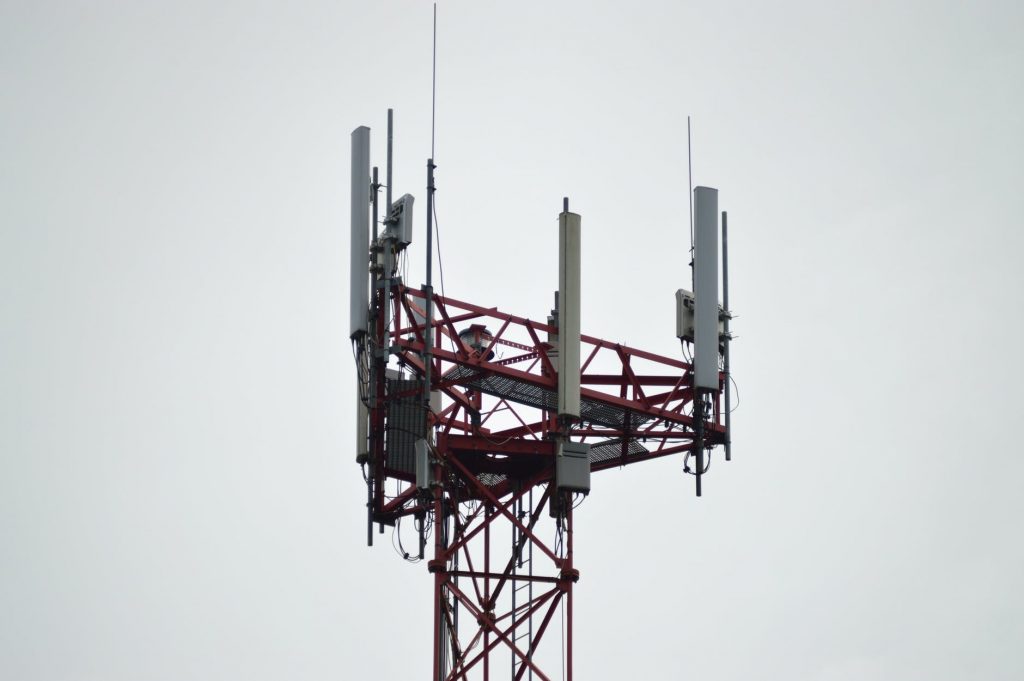
A jetpack, on the other hand, functions as a specialized mobile hotspot that, like your smartphone, picks up a signal from nearby cell towers. It can connect to more devices and has a wider range of WiFi. Because it’s a separate device, it doesn’t drain your smartphone’s battery. The disadvantage is that you must purchase both the jetpack and a separate plan.

Mobile Connections

3.    4G LTE Home Internet

 If you reside in a remote location with limited internet alternatives, 4G LTE Home Internet is a viable option. It provides high-speed internet access via cell phone towers and mobile networks, with average download rates of approximately 25 Mbps and often lower latency and more data than satellite. Depending on your provider, the benefits include faster speeds and more dependability. Limited availability, as well as the cost of service and setup, are some of the drawbacks of 4G LTE Home Internet.

4.    5G Home Internet

With the expansion of 5G Home Internet (Fixed Wireless Access), it has the potential to become one of the best and most cost-effective internet services available. It offers more capacity than 4G, substantially quicker speeds (up to 1Gig), and lower latency than what most people experience at home, thanks to the use of a new range of strong radio frequencies across a wireless network.

Service reliability is generally exceptional since 5G wireless base stations are often within 10 kilometers of houses. The only major disadvantage of 5G Home Internet right now is its restricted availability, but that is going to change.

Codes - wifi vs internet - streamtech fiber internet
Photo by Markus Spiske on Pexels

What is Internet and how does it work? What is the World Wide Web?

The Internet connects billions of computers and other electronic devices across the world. With the Internet, you can get practically any information, interact with people all over the world, and do a lot more. All of this may be accomplished simply by connecting a computer to the Internet, often known as going online.

The World Wide Web, or simply the Web, is a collection of various websites that you may visit over the Internet. A website is made up of content, pictures, and other materials that are all connected. Websites can seem like other types of media, such as newspaper articles or television shows, or they might be interactive in a way that only computers can provide.

A website may serve practically any purpose: it might be a news platform, an advertisement, an online library, a forum for exchanging photos, or an educational or instructional site. When you’re online, you may use a web browser to access and see websites. Keep in mind that the web browser is not the Internet; it only shows websites that have been stored on the Internet.

It’s critical to remember that the Internet is a worldwide network of physical links, including copper telephone wires, television cables, and fiber optic cables.

Even wireless networks such as WiFi and 3G/4G have physical wires to connect to the Internet. When you go to a website, your computer makes a request to a server through these lines. Websites are kept on a server, which functions similarly to your computer’s hard disk. The server fetches the webpage and delivers the proper data back to your computer after the request is received. What’s even more astonishing is that it all happens in a matter of seconds!

Internet works - wifi vs internet - streamtech fiber internet
Photo by rawpixel

Types of Internet Connection

The type of Internet connection in an area will have a significant impact on the availability, speed potential, and general quality of Internet services that customers are subscribing to.

1.   Fiber Internet – The fiber-optic internet is perhaps the finest connection type. Fiber, as the name implies, refers to an Internet connection delivered to your house via fiber-optic cable, which transmits data by sending pulses of light down tiny strands of glass or plastic called fibers.

These fiber-optic strands provide faster and more reliable connections than other forms of connections. Although fiber-optic can provide download speeds of up to 2 gigabits (2,000 megabits per second) — fast enough to download a two-hour HD movie in under a minute — most fiber-optic providers’ maximum download speeds are likely to be around 1,000Mbps. Upload speeds are also much quicker with fiber-optic connection, which is very crucial while working and studying from home.

Subscribe to Streamtech Fiber Internet

2.  Satellite Internet – Because satellite Internet does not rely on ground-based infrastructures such as cables, cellular towers, or line-of-sight antenna connections, it is one of the most broadly available kinds of Internet. Instead, you’ll communicate with satellites circling high overhead using a unique dish.

Your Internet provider will come out and place a satellite dish on the top of your house or on the ground pointing southerly to get it set up. It is ideal for those who live in remote regions with few alternative options, especially since poor weather and other impediments may impact your service in ways you can’t predict.

 The more conventional ones

3.   Cable Internet

Although cable internet lacks the speed and dependability of fiber-optic as an Internet source, it is more commonly available. Cable is one of the most popular Internet connections, and it’s frequently combined with home phone and TV services. Because cable Internet utilizes the same coaxial connections as cable TV, this makes it logical.

Although coaxial connections lack the speed and dependability of fiber-optic lines, cable internet remains one of the quickest options when it comes to Internet speed. Most cable companies provide a range of download speeds, including a gigabit package with download rates of about 940 Mbps. Upload rates, on the other hand, are a different story, with few providers offering upload speeds of more than 50Mbps.

4.   DSL Internet – DSL stands for digital subscriber line, and it’s commonly offered in regions where cable or fiber Internet isn’t available. This type of broadband Internet allows you to connect to the Internet via your phone lines. Unlike dial-up, which would cause a call to break your connection, DSL allows you to access the Internet without worrying about an incoming call disrupting your connection.

5.   Cellular Internet – A cellular connection is another option to get internet access over the air. A mobile phone provider links your router or hotspot device to the nearest cellular tower using this internet connection type, just as it does with your phone.

Speeds will vary depending on where you live and how near you are to a tower, but they will almost certainly be faster than a fixed wireless connection.

working on computer - wifi vs internet - streamtech fiber internet
Photo by ThisIsEngineering on Pexels

What’s the difference between WiFi and Internet?

It is important to note that these are just two terms that describe two separate inventions with their own unique sets of benefits depending on your needs and preferences. The reason we have compared them in this article is for customers, who are looking into getting an Internet plan, can make an informed decision about what type of service they can subscribe to.

1. Speed

The most apparent difference between WiFi and the Internet is their speed. As mentioned above, you can get wired or wireless connections. Wireless connections are obviously faster than wired connections but theoretically, there is no difference in speed between WiFi and the Internet if they are both wired up to a router or modem. However, most people connect their computers to the networks wirelessly instead of using cables so there will definitely be different speeds. To conduct a more accurate test, Internet download tests like Speakeasy Speed Test and Firefox Test Speed would be useful comparisons since downloading online files require more bandwidth. WiFi downloads are more dependent on the infrastructure of the wireless connection.

2. Usage

The way you use and access the Internet is also a big difference between WiFi and the Internet. You can connect to the Internet via WiFi in many places nowadays such as libraries, coffee shops, or school campuses. But sometimes they restrict usage according to bandwidth load which is why many people are not able to connect. Wi-Fi connection will be more common in offices since they have a better bandwidth capacity compared to home networks with many computers connected at once. An Internet connection will provide a steadier connection than WiFi because it is wired while also having fewer restrictions compared to public locations with free WiFi hotspots.

3. Signal strength

Both types of networks (WiFi and Internet) depend on signal strength. The higher the signal strength, the more stable your connection is with little or no interference. WiFi hotspots will be harder to access than the Internet because there may be a low amount of bandwidth which can interfere with network usage

4. Security

Both Wi-Fi and Internet are prone to security risks if they aren’t properly secured by enabling passwords and encryption. It is also important to make sure that you are connected to a secure WiFi network so that unauthorized users cannot tap in and access your data. If you want even better protection, find out what kind of encryption level your wireless router supports and ensure that it is enabled for maximum protection against hackers.

Cell tower - wifi vs internet - streamtech fiber internet
Photo by Miguel A. Padrinan on Pexels

The Streamtech Difference

Whether it is WiFi or Internet, the most important thing is getting the best internet service for your online needs.

Amazing news! Streamtech, the country’s newest internet service provider or ISP, allows you to enjoy fast and reliable fiber Internet access at a reasonable price. With its connection to a global area network, its connection is, indeed, reliable. It gives the best home fiber internet that will suit your own unique routines. Subscribers are able to access the internet content that they need.

Connect with Streamtech Fiber Internet now

It also provides an upgraded Internet experience for residential subscribers to match their household needs. With its available Extendifi Wi fi Extenders, customers can spread the wi fi signal coming from the wi fi router to all parts of the home.

With Streamtech, you can get fast, reliable, and unlimited internet plans that are also affordable. The Internet service packages can also be bundled with cable TV services through Planet Cable.

Subscribe to Streamtech now and enjoy an upgraded Internet experience and enhanced connectivity! Visit its website or Official FB Page if you have questions or for more details.