Categories
News

Latest COVID-19 Updates in the Philippines

You may have recently noticed an uptick in cases reported in the Philippines due to the Omicron variant of COVID-19. This is because new research has found that it can be highly contagious, and people should take precautions accordingly. We must stay informed so we know what steps are necessary to avert the transmission of the virus.

With the wonders of the internet, it is easy to keep ourselves updated with the latest news and reports about COVID-19. That’s why it is necessary to get an amazing fiber internet afforded by the best internet provider in the Philippines.

If you want to get COVID 19 up to date information in the Philippines, read on:

Subscribe to Streamtech Fiber Internet

You can also checkout these related articles:

1. COVID cases in PH have reached 3M

According to the country’s Department of Health (DOH), the total number of confirmed COVID 19 cases in the Philippines has reached 3,026,473 since the pandemic began. The latest COVID-19 bulletin, dated January 11, showed that there are 181,016 active cases while total recoveries rose to 2,792,946, or 92.3% of total recorded infections since the pandemic started in March 2020.

The highest daily number of cases in record was on the January 10, 2022 report, with 33,169 new cases.

 2. Omicron is now the dominant COVID-19 variant in PH

Health Secretary Francisco Duque III said that the highly contagious Omicron variant has replaced the Delta variant as the dominant variant of the COVID-19 virus in the Philippines. Based on the last run of genome sequencing on January 3, 60% of the samples sequenced were positive for Omicron variant. In the genome sequencing where 48 samples were taken, 60.42% or 29 cases from these test results were Omicron cases while 18 were Delta cases.

Omicron - covid 19 update philippines - streamtech fiber internet
Photo by Sasha’s Lab on Flickr

3. PH now classified as critical risk

Due to the increase in the average daily reported cases that went up by 690 percent from January 4 to 10, with an average daily rise of 20,481 cases, this placed the country under critical risk classification. It was comparatively smaller than the 726 percent rise reported from December 28 to January 3.

The National Capital Region (NCR), Calabarzon, and Central Luzon are the regions under the critical risk category for COVID 19.

4. NCR with the most number of cases

NCR has the highest number of total cases in the last two weeks, with 15,256 or 55 percent of new infections; Calabarzon has 5,861 or 21 percent; and Central Luzon has 3,064 or 11 percent.

With 219 additional deaths, the death toll has risen to 52,511 people, accounting for 1.74 percent of all cases.

According to OCTA Research, the average daily attack rate (ADAR) in NCR has increased to 89.42 on Jan. 4 to 10, placing the region on severe outbreak status. The region has been placed under Alert Level 3.

5. 52.8M Filipinos are fully-vaxxed

As of January 10, a total of 52,856,932 individuals have been fully vaccinated against COVID-19 in the country, based on data from the DOH. Meanwhile, over 62.1 million have received at least one dose.

Administration of a total of 114,263,805 COVID-19 vaccine doses have been successful in the Philippines. The Philippines aims to vaccinate 90 million by June.

On one hand, by the end of the third quarter of this year, more than 71.16 million adult Filipinos would have received COVID 19 booster vaccination doses.

get vaccinated - covid 19 update philippines - streamtech fiber internet
Photo by the Department of Health

6. 60% fewer hospitalizations in NCR due to high vaxx rate

Due to the high vaccination rate in the region, those infected with COVID 19 in the NCR are 60% less likely to need hospitalization than those in other locations, according to the Department of Health.

During the holidays, COVID 19 cases in Metro Manila spiked, although the majority of them were not severe (needing hospitalization).

In the NCR, there is a phenomenon famous to be as decoupling. This means the increase in infections does not correspond to an increase in the number of severe and critical cases.

7. Vaccine is still the best defense against COVID 19

The health department reiterated that vaccination is still the greatest protection against COVID-19, refuting an OCTA Research member’s suggestion that the Omicron version may work as a natural vaccine.

OCTA Research Fellow Fr. Nicanor Austriaco said that the Omicron variant can work as a natural vaccination since it struggles to enter the lungs and that the symptoms would likely be milder. Individuals who survive the Omicron will develop antibodies that might protect them from other variants including Delta, Gamma, Beta, Alpha, and D614G.

8. DOH shortens the interval for booster shots

The DOH has reduced the interval for booster shots against COVID-19. Under the new policy, boosters could now be administered to adults at least three months after the second dose of a primary two-dose vaccine or at least two months after the primary single-dose vaccine is given.

AstraZeneca, Moderna, Pfizer, Sinovac, and Sputnik are two-dose vaccines, whereas Janssen is the only single-dose vaccine currently approved for use in the country.

booster shot - covid 19 update philippines - streamtech fiber internet
Photo by Daniel Schludi on Unsplash

9. FDA approves Pfizer’s COVID-19 pill

The Department of Health (DOH) has received approval from the Philippine Food and Drug Administration (FDA) for the generic version of Pfizer’s COVID-19 antiviral tablet Paxlovid.

The DOH’s application for compassionate special permission for institutional use has been authorized by the FDA. This allows the first generic version of Paxlovid, known as Bexovid, to be available.

Known as Bexovid, it is the world’s first generic equivalent of Pfizer’s US FDA-approved brand Paxlovid. Nirmatrelvir and ritonavir are the generic names for this drug.

10. Unvaxxed citizens ordered to stay at home

Indeed, there’s a need to stem the increasing number of COVID-19 cases and prevent the virus spread in the country. Hence, the Philippine government has provided directions to village officials. The order is to restrain the unvaccinated individuals in their communities and make sure they stay at home.

The mobility restriction directive for the unvaccinated is meant to ensure the public’s safety, health, and well-being.

unvaccinated stay at home - covid 19 update philippines - streamtech fiber internet
Photo by Sarah Kilian on Unsplash

Be informed of COVID-19 updates

With the surge of COVID cases in the country, it is better to be safe. This is by staying at home to avert the transmission of the virus. Despite the mobility restrictions, we can keep ourselves up-to-date with the latest information about COVID-19. Indeed, we can gain information through the official government websites and links. Also, there are credible media outlets that can provide accurate reports regarding the pandemic.

To make sure that we are updated with fresh COVID news, we need fast connection. Thus, it is recommended that we get the ultimate fiber internet from a trusted internet provider in the Philippines.
Streamtech Fiber Internet

Streamtech, a new internet provider in the country, can give people the best fiber home internet with high-speed internet connections and cable TV services at a low cost.

Subscribe to Streamtech now and enjoy an upgraded internet experience and enhanced connectivity! Visit the Streamtech official FB Page for more details.
Categories
News

Here are the Latest Updates on the Limited Face to Face Classes in PH

Written by: Maine Dela Cruz

In the last quarter of 2021, the government ordered the resume of face-to-face classes in the Philippines. This is for the first time in over two years. This is despite the surging COVID-19 cases and the presence of the Omicron variant in the country.

Indeed, other students and institutions will continue to rely on their fast internet connection and smart devices for online learning. Meanwhile, the government announced further movements of the former scenario. The Commission on Higher Education (CHED) has announced the rollout of the second phase of limited face-to-face classes for higher education institutions (HEIs) in areas placed under Alert Level 3 in the Philippines on January 31.

While the future remains uncertain, let us look back on the events that transpired. Let us dig in the early stages of the limited face-to-face classes resumption.

Phase 1: Pilot Run

pilot test - limited face to face classes - streamtech fiber internet
Photo from DepEd Philippines’ Official Facebook Page

In November 2021, the interagency task force (IATF) on COVID-19 approved a gradual implementation of face-to-face college and university programs. The pilot run of restricted face-to-face classes began on November 15 with 100 schools.  On December 6, a total of 287 public and private schools in various provinces joined the test run. This, however, represents a small percentage of the country’s approximately 60,000 public and private institutions.

Education Assistant Secretary Malcolm Garma stated that the pilot run of face-to-face sessions would establish best practices. These can be used in the country’s new normal of classroom learning. The Department of Education emphasized kindergarten and grades 1 to 3 since these are the pupils’ formative years. These are also the levels that require additional assistance from their instructors. Students in their senior year of high school were also chosen since some of their topics demand “hands-on” instruction. The education official stated that in preparation for the expansion phase, expected to begin in January 2022, additional grade levels and schools may already begin offering limited face-to-face instruction.

Subscribe to Streamtech Fiber Internet

You may also checkout these related articles:

Primary and Secondary Level

On November 29, 2021, 20 public schools in the Cordillera Administrative Region (CAR) started limited face-to-face classes. Department of Education (DepEd) Regional Director Estela Cariño said on Wednesday, November 24, that out of more than 100 schools who applied for the pilot run, only 20 met the requirements.

Meanwhile, a memorandum dated Dec. 9, 2021, by the DepEd has directed all public and private schools to prepare for the implementation of the expanded phase of the face-to-face classes targeted to start in early 2022. Based on the memo, the expanded phase shall cover all grade levels from Kinder to Grade 12. Briones assured that they have been in coordination with the Department of Health.

Aside from risk assessment, she said there should also be a go signal from the local government units and the parents.

Tertiary Level

As of October 31, 162 HEIs have been issued authority to conduct limited face-to-face classes. This is just 7% of the total HEIs in the country. More than 27,000 students are attending face-to-face classes, while around 2,300 faculty members are teaching.

Phase 2: New Normal Learning Setup

new normal learning - limited face to face classes - streamtech fiber internet
Photo from Marinduque News’ Official Facebook Page

Limited face-to-face classes will be implemented for all courses in state universities and colleges and private higher education institutions. According to education officials, the “new normal” in education would not be a “purely classroom setup.” The following will be the learning setup in the new normal:

1. Only vaccinated students and school personnel can attend

According to the Commission on Higher Education (CHED), limited face-to-face classes will cater to those students who have been vaccinated. Meanwhile, those who are still unvaccinated can still participate through online classes.

As of November 25, at least 82.45 percent of higher education institutions personnel in both public and private universities have been vaccinated against COVID-19.

2. Limited capacity

Examples of conditions included limited indoor venue capacity, no opposition from the respective local government unit, and the exclusive participation of fully vaccinated students, teachers, and non-teaching personnel.

For Alert Level 3 areas, HEIs must only allow a maximum of 30% indoor venue capacity and 50% outdoor capacity for fully vaccinated individuals only.

3. Minimum health standards

Students will have to observe the minimum health protocols such as physical distancing and wear face masks throughout the class.

4. Plastic barriers not required

Putting up plastic barriers in classrooms is not a requirement for schools implementing face-to-face classes. Said dividers may affect students’ sight, hearing, or behavior. He also said that these serve as another layer of confidence given to parents to assure them of the students’ safety while in class.

5. School officials-LGU coordination

To ensure the smooth return of face-to-face learning in college, the CHED Commissioner told school officials to coordinate with local governments on this effort.

Streamtech: Your Partner in Learning in the New Normal

Streamtech Fiber Internet

One key tool every student should have for a successful school year is fast and reliable fiber internet connection. Through this, you can log on to your online class, and do your research, answer exams, monitor your study routine, connect with teachers, collaborate with classmates, and so much more. You can do almost everything you need online. One great supplier for fast and reliable fiber internet is Streamtech. 

Streamtech is one of the newest internet providers in the Philippines. It offers dedicated fiber internet access, leased line, and WiFi services to subscribers in the franchise areas powered by its own fiber-optic backbone link. Indeed, through its fiber internet plans, subscribers can rest assured of having a fast and reliable connection, thereby, seamless access to online contents of their needs.

Your whole household can enjoy the great services of Streamtech through the Extendifi WiFi extender. Now, your first day of school this year will be better because you have a reliable internet connection plus useful devices. Discover why people are making the switch, and turning to Streamtech today.

Subscribe to the newest internet provider in the Philippines to get started. 

You may also visit the Streamtech official Facebook page for more details.

Categories
News

Know the List of Holidays in the Philippines this 2022

Written by: Aiya Rodjel

Are you already arranging your trips for this year? It is essential to factor in regular holidays to your planning to take advantage of them. You can lower your number of vacation leaves and absences by considering national holidays in your plans. That’s why it’s essential to have a fiber internet connection through a trusted internet service provider in the Philippines. This is to make sure you’re up-to-date on announcements on the Philippine holidays.

There are 18 national holidays in the Philippines. Out of these 18 holidays, four are “special non-working” days. The Labor Code of the Philippines states that all employees have the entitlement to paid leaves on the other national holidays. If you have to work on these holidays, you can get double pay. This means you get twice the amount you would receive on a ‘regular’ working day.

In 2021, a large number of the Philippine workforce had to work on December 24 and 31. This is because the president declared them as special working days by the president. This meant that many people were still working on Christmas and New Year’s Eve. This decision was made to encourage economic productivity. This new proclamation is a good reason why keeping up on the news on holidays is essential all year round.

However, according to the law, the president cannot change regular holidays without separate proclamations. Hence, it would be best if you considered the following list of holidays in the Philippines in your planning:

Subscribe to Streamtech Fiber Internet

You can also check out these related articles:

New Year’s Day: January 1

January 1 marks New Year’s Day. This holiday is top-rated worldwide as most people celebrate the turn of the new year. Most people stay up past midnight and make the most of the New Year celebration. All the festivities leave everyone tired, after all. The merriment on the evening of December 31 is the main reason why people get the day off on New Year’s Day.

(Tuesday) Chinese New Year: February 1

The Chinese New Year marks the start of the lunar calendar, which occurs between January 21 and February 20. In the Philippines, (Tuesday) Chinese New Year is considered a special non-working holiday, not a paid holiday. However, if employees work on this special non-working holiday, they are entitled to 30 percent extra pay for the hours worked.

People Power Revolution Anniversary Day: February 25

February 25 marks the anniversary of the EDSA People Power revolution. This holiday pays homage to the first-ever nonviolent protest calling for a change of government. Since 2002, EDSA People Power Revolution Anniversary Day has been a special non-working holiday.

Day of Valor: April 9 (Saturday)

Previously known as Bataan Day, the Day of Valor is a celebration of the heroism and sacrifice of the Filipino and American troops during World War II. The Day of Valor (April 9, Saturday) is an official regular nationwide holiday.

other 2022 philippine holidays - streamtech fiber internet
Photo by Towfiqu Barbhuiya on Unsplash

Holy Week: April 10 to 16

As a predominantly Catholic country, the country observes many holidays in the Roman Catholic Calendar. Officially, Holy Weeks starts from Palm Sunday to Easter Sunday. However, most establishments are closed only on Maundy Thursday and Good Friday. On Black Saturday, a lot of businesses open their doors once again.

Holy Week marks one of the most critical long weekends in the country. It’s a time to reflect and ponder on the great things the Lord has bestowed on people. It’s also a time to rest. That’s why it’s a great idea to go out of town on Maundy Thursday, Good Friday, and Black Saturday.

Labor Day: May 1

In the Philippines, Labor Day is a public holiday held every May 1. This regular holiday is held to celebrate the Filipino worker. It is a chance to remember hard-won workers’ rights. Many people take time to rest and recharge on this regular holiday. It’s also an excellent opportunity to take a quick trip outside Metro Manila.

Islamic holidays: Eid al-Fitr (May 12) and Eidul Adha (July 9)

Muslim Filipinos comprise about six percent of the population. As such, in observance of their Islamic heritage, the country observers two key Islamic holidays: Eid al-Fits and Eidul Adha.

Eid al-Fitr is a significant holiday for Muslims all over the world because it marks the end of their month-long fast, or Ramadan. Meanwhile, Eidul Adha is an important Muslim holiday. It is also famous as the Feast of Sacrifice.

Independence Day: June 12 (Sunday)

Additionally, to commemorate the country’s liberation from Spain, we celebrate June 12 (Sunday) as a regular national holiday. Independence Day is a celebration of the freedom Filipinos enjoy to this day.

Other 2022 Holidays (Christmas Eve, All Souls’ Day, Immaculate Conception of Mary, etc.)

These are only some of the Philippine holidays you should keep on your radar. However, aside from the other holidays mentioned above, there are also a lot of other special observances in the country. These include Ninoy Aquino Day (August 21), National Heroes Day (August 29), All Saint’s Day (November 1), All Souls’ Day (November 2), Bonifacio Day (November 30), Immaculate Conception of Mary (December 8), Christmas Day (December 25) and Rizal Day (December 30).

Streamtech Fiber Internet

Certainly, the actual dates of some of these holidays vary every year. There are also instances wherein the government revokes special working days to minimize work disruption. Thus, to keep up with all the holiday news, you need a fiber internet connection in your household.

As one of the newest internet service providers in the Philippines, we at Streamtech will help you stay updated with the latest news and happenings. Indeed, through Streamtech, you have access to a fast and reliable fiber internet connection. We can also equip you with cable TV services through our partnership with Planet Cable.

Indeed, it’s essential to have a fast and reliable internet service provider in the Philippines nowadays. That’s why you should invest in yourself by subscribing to Streamtech. To know more about Streamtech and our product offerings, visit the Streamtech official Facebook page today.

Categories
News

List of the Most Affordable Phones You Can Buy This 2022 in the Philippines

Phones are a necessary part of life. They keep us connected with the people we love and allow us to do our jobs. However, not all phones are created equal, and some can be quite costly. Some people like to have the newest, most up-to-date but expensive smartphones. However, others don’t want to spend a lot of money on this gadget.

Certainly, you can find a lot of information on the best smartphones on the web. If you have an amazing fiber internet by a trusted internet provider in the Philippines, you can certainly come across a good phone that fits your needs at an affordable price.

The best cheap phones for almost every budget

In our list, we have chosen smartphones, including Android phones, from brands that sell their devices at a relatively low price point and also offer good specs for the money. Of course, there are cheaper options out there. But just because a phone is cheap doesn’t mean it must be included in our list. In fact, some of the cheapest devices out there are only worth buying if you absolutely need a new phone and have no other option.

For this list, we also took into account many different factors. These include: performance, specs, battery life, durability, and overall value. With that being said, let’s take a closer look at the list.

1. TECNO Camon 18

Certainly, the TECNO Camon 18 is one of the best cheap smartphones. It has a 6.8-inch FHD+ display with a 90Hz refresh rate, triple rear cameras of 48MP, 2MP, and 2MP, as well as a single 16MP punch-hole selfie cam.

Additionally, in terms of cameras, the Tecno Camon 18 has a triple camera configuration on the back. It also has a 48-megapixel primary camera with an f/1.79 aperture, a 2-megapixel secondary camera, and an AI Lens camera. Optical zoom, night mode, and autofocus are also available. For selfies, it includes a single front camera with a 48-megapixel sensor.

Indeed, the Tecno Camon 18 has 128GB of internal storage and runs HIOS 8. It is based on Android 11. There is a dual-SIM (GSM and GSM) mobile phone. And it is with Nano-SIM and Nano-SIM cards that may be used with the Tecno Camon 18. The height, breadth, and thickness of the Tecno Camon 18 are 168.86mm, 76.67mm, and 8.77mm, respectively. It was released in the hues Dusk Gray and Iris Purple.

The TECNO Camon 18 is priced at P9,499.00 in the Philippines.

techno camon 18 - affordable phones 2022 - streamtech fiber internet
Photo by Pinoy Tech Guide

2. realme 8i

The realme 8i has a 6.6-inch FHD+ display with a 120Hz screen refresh rate. It also has triple back cameras of 50MP, 2MP, and 2MP, and a 16MP front camera.

It has a MediaTek Helio G96 CPU with 4GB or 6GB of RAM, Android 11 as the operating system, and realme UI 2.0 as the software. A fingerprint scanner on the side, 4G LTE connection, dual-band Wi-Fi, and up to 128GB of expandable storage are also included.

With a 120Hz refresh rate, which is twice as fast as standard screens, every swipe is silky smooth. This phone may save battery power with up to six different refresh rates available. As a gaming phone, you’ll get rapid touch response and a broader field of vision for mobile gaming. The smartphone is powered by a big 5,000mAh battery, that assures long battery life and supports 18W rapid charging through USB Type-C.

The starting price for realme 8i is set at P9,990.00 for the 4/64GB version and P11,990.00 for the 6/128GB version here in the Philippines.

Subscribe to Streamtech Fiber Internet

You may also check these related articles:

3. Infinix Note 11S

The Infinix Note 11s is another affordable phone that has a 6.95-inch FHD+ display with a 120Hz screen refresh rate, triple rear cameras of 50MP, 2MP, and 2MP, and a 16MP front camera. Surprisingly, the Infinix Note 11S’s camera configuration includes a 50-megapixel main camera, a 2-megapixel camera, and a 2-megapixel camera. For selfies, it includes a single front camera with a 16-megapixel sensor.

Android 11 is used in the Infinix Note 11S, which comes with 128GB of internal storage that can be increased via a microSD card (up to 2000GB). Nano-SIM and Nano-SIM cards are accepted on the Infinix Note 11S, which is a dual-SIM mobile phone. Haze Green, Mithril Grey, and Symphony Cyan are among the colors available.

Compass/magnetometer, gyroscope, proximity sensor, and fingerprint sensor are among the phone’s sensors. Face unlock is available on the Infinix Note 11S.

The Infinix Note 11S is available for P9,990.00.

infinix note 11s - affordable phones 2022 - streamtech fiber internet
Photo by GSM Arena

4. POCO M3 Pro 5G

The POCO M3 Pro 5G is an affordable smartphone featuring a 6.5-inch FHD+ display with a screen refresh rate of 90Hz, three rear cameras of 48MP, 2MP, and 2MP, and a single 8MP punch-hole selfie camera.

An Android 11 OS and MIUI 12 software are included, as well as a MediaTek Dimensity 700 5G CPU with either 4GB or 6GB of RAM. A fingerprint scanner on the side, 5G connection, NFC, an IR remote controller capability, high-resolution dual stereo speakers, and up to 128GB of expandable storage are all included.

In terms of battery capacity, the gadget is powered by a massive 5,000mAh battery that supports 18W rapid charging through USB Type-C. It is available in three colors: Power Black, Cool Blue, and POCO Yellow.

The POCO M3 Pro 5G is available in the Philippines for P 8,990.00 for the 4GB RAM version and P 11,990.00 for the 6GB RAM version.

5. Cherry Mobile Aqua S10 Pro

Featuring a 6.67-inch FHD+ display, 48MP + 5MP + 2MP + 2MP quad rear cameras, and a single 16MP punch-hole front camera, the Cherry Mobile Aqua S10 Pro is a cheap phone.

It has a MediaTek Helio G90 CPU, 6GB of RAM, and Android 11 as its operating system. A fingerprint scanner on the back, 4G LTE connection, and 128GB of expandable storage are all included.

With regards to battery life, this android phone is powered by a big 5,000mAh battery. This low-cost phone will also help you uncover your gaming potential. With the Aqua S10 Pro’s 30W Pump Express 2.0 fast-charging, you can experience the excitement for hours. With its 128GB UFS 2.1, you can also save a lot of games so you can see where you perform best.

The Cherry Mobile Aqua S10 Pro is one of the most comprehensive phones at the price of P7,999.00.

cherry mobile aqua s10 - affordable phones 2022 - streamtech fiber internet
Photo by Walastech

6. Samsung A51

Samsung A51 is one of the first phones to use Samsung’s flagship-level Infinity-O display cutout. A light phone that is also simple to use. Super AMOLED technology provides rich and vibrant colors.

An Exynos 9611 Octa-core SoC powers the phone, which is a little out of date and not very strong for a mid-range smartphone in 2020. Some features such as the ability to organize your SMS messages in the form of visual cards, multilingual predictive typing, and Smart Crop, which claims to detect the most relevant part of a screenshot and crop it with a single tap, are included in the One UI 2.0, which runs on Android 10.

Samsung employed a chip that was more powerful. This is also one of the first Samsung cheap phones to offer a macro camera that is devoted to that purpose. The 4,000mAh battery has a reasonable daytime battery life, and it also supports 15W rapid charging.

Samsung A51 is available for the price of P13,990.00

7. Vivo V20 SE

In addition, the Vivo V20 SE is 161 x 74.1 x 7.8 mm in size and weighs 171 grams. It also has a resolution of 1080 x 2400 pixels and supports Dual SIM (Nano-SIM, dual stand-by).

It has 8 GB of RAM and 128 GB of internal storage. The Qualcomm SDM665 Snapdragon 665 Octa-core CPU powers the smartphone. The Vivo V20 SE is powered by Android 10 and Funtouch 11.

It has a non-removable Li-Po 4100 mAh battery and a fast-charging 33W battery that charges at 62 percent in 30 minutes. Gravity Black and Oxygen Blue are two of the colors offered for this smartphone.

Fingerprint (under display, optical), accelerometer, gyro, proximity, and compass sensors are all included in the smartphone. The smartphone has three cameras: 48 MP (wide), 8 MP (ultrawide), and 2 MP (telephoto) (depth). On the front, there are twin cameras with 32 MP resolution (wide).

The Vivo V20 SE is priced at P13,999.00.

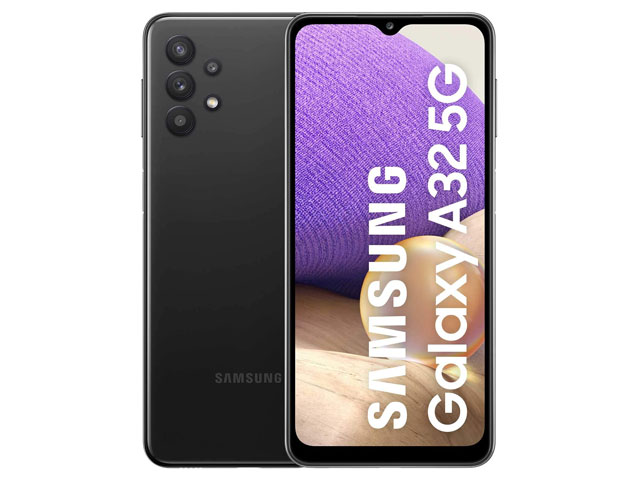
8. Samsung Galaxy A32 5G

This Samsung Galaxy phone has a 6.5-inch HD+ display, four back cameras of 48MP + 8MP + 5MP + 2MP each, and a single 13MP front camera on a tiny notch, making it an affordable 5G phone.

It has 8GB of RAM, a MediaTek Dimensity 720 5G CPU, Android 11 OS, and One UI 3.0 software. A fingerprint scanner on the side, 5G connection, NFC, and 128GB of expandable storage are all included. The gadget is powered by a big 5,000mAh battery that supports 15W rapid charging through USB Type-C.

With the classic camera design and glossy finish on the rear, this phone not only stands out – it sets a new standard. Wrap your hands around the delicate soft edge design of the stunning Galaxy A32 5G. Awesome Black, Awesome White, Awesome Blue, and Awesome Violet are four eye-catching hues to choose from.

The Samsung Galaxy A32 5G is priced at P15,990.00 in the Philippines.

samsung galaxy a32 5g - saffordable phones - streamtech fiber internet
Photo by GSM Arena

9. Asus Zenfone Max Pro

The Asus Zenfone Max Pro (M2) is 175 grams in weight and is 157.9 x 75.5 x 8.5 mm in size. The smartphone is made up of three different materials: a glass front (Gorilla Glass 6), a plastic back, and a plastic frame. There are two hues available: Titanium and Blue.

The Asus Zenfone Max Pro (M2) has a 6.26-inch IPS LCD capacitive touchscreen display with a resolution of 1080 x 2280 pixels and a 19:9 aspect ratio. It can handle two SIM cards at the same time (Nano-SIM, dual stand-by).

The Qualcomm Snapdragon 660 (14 nm) Octa-core CPU powers the smartphone, which also has an Adreno 510 graphics processing unit. It’s based on Android 8.0 (Oreo) with the option to upgrade to Android 9.0. (Pie).

This phone is available in the Philippines for P14,995.00 for the 6GB RAM version and P 12,995.00 for the 4GB RAM version.

10. Huawei Nova 7i

The Huawei Nova 7i has a 6.40-inch touchscreen display with a pixel density of 398 pixels per inch and a resolution of 1080×2310 pixels (ppi). This phone is powered by an octa-core HiSilicon Kirin 810 processor with two 2.27GHz cores and six 1.88GHz cores. It has an 8GB RAM capacity. The Huawei Nova 7i is powered by a 4200mAh battery and runs Android 10.

There is a 48-megapixel main camera with an f/1.8 aperture on the back, as well as an 8-megapixel camera, a 2-megapixel camera, and a 2-megapixel camera. It has a front-facing 16-megapixel camera with an f/2.0 aperture for selfies.

The Huawei Nova 7i weighs 183.00 grams and measures 159.20 x 76.30 x 8.70mm (height x width x thickness). Sakura Pink, Midnight Black, and Crush Green are among the colors available.

This phone is priced at P 11,999.

Huawei-Nova-7i-affordable phones 2022 - streamtech fiber internet
Photo by PhoneAqua

11. OnePlus Nord N10 5G

In addition to a 6.49-inch FHD+ display with a 90Hz screen refresh rate, the OnePlus Nord N10 5G has a 64MP quad rear camera configuration and a punch-hole 16MP front camera.

Android 10 OS, and the OxygenOS user interface are all included. It’s powered by a Qualcomm Snapdragon 690 5G CPU with 6GB of RAM. A fingerprint scanner on the back, dual-band Wi-Fi, NFC, dual speakers, and 128GB of expandable storage are also included.

The smartphone is powered by a 4,300mAh battery that supports Warp Charge 30T rapid charging technology.

The OnePlus Nord N10 5G is available in the Philippines for a starting price of P14,990.00.

OnePlus Nord N10 5G - affordable phones 2022 - streamtech fiber internet
Photo by GSM Arena

What to look for in affordable phones?

The new budget phones of today are small marvels. More than just entry-level units, they pack all the bells and whistles that made their flagship counterparts more enticing for even power users. Recently, it’s possible to find a high-performing midrange good phone on a limited budget. Here are some of the things you should consider when shopping for a low-cost smartphone:

1. Display Quality

A lot has changed in terms of display quality since the days of yesteryear where phones used to ship with low-resolution panels. Even if smartphones are constantly evolving, many people tend to hang on to their units for longer periods of time. Because of this, it helps if the display resolution is decent as some would have a hard time adjusting to low-resolution panels.

2. Performance

Processor selection has completely changed since the days when budget smartphones were powered by ancient processors from yesteryear. Power users had very few options in this price range but now there’s enough power on tap to satisfy most people as even entry-level phones today pack capable octa-core chipsets.

3. Battery Life and Wireless Charging

Even if we’ve become accustomed to charging our smartphones every night, it doesn’t change the fact that we’d rather have better battery life than not knowing when our budget phone will run out of juice. It is also recommended that the phone is capable of wireless charging support.

4. Camera Quality

A good camera can make or break any smartphone experience so always look for something more than just an 8MP rear-facing unit which is pretty much the standard resolution found on budget devices today.

5. Accessories

Some low-cost phones don’t get the same level of love from accessory makers like flagship models get but that doesn’t mean you’re stuck with poorly designed or made accessories. A lot of manufacturers partner with third-party producers to develop great-looking back covers, cases, headphone jack, and screen protectors for their devices.

6. Availability

Since we’re dealing with cheap smartphones, they tend to get released in smaller quantities and receive shorter life spans before manufacturers start phasing them out. This is why it’s important to always check for the latest models.

Shop for the best, cheap phones online via Streamtech

If you’re searching for a new phone but don’t want to spend a lot of money, you can definitely find a good but affordable one on the internet through various online shopping platforms. You not only get the best deal, but you can also check the specs to see whether they meet your needs.

Thus, with all the phone shopping stores you need to check on the web, it is best if you are equipped with the ultimate fiber internet afforded by the best internet provider in the Philippines.

Indeed, through Streamtech, a trusted internet provider in the country, you can have an amazing fiber home internet with high-speed internet connections and cable TV services at a low cost.

Subscribe to Streamtech now and enjoy an upgraded internet experience and enhanced connectivity! You may also visit the Streamtech official FB Page for more details.

Categories
News

Why the Use of Space Tech is Encouraged in the Philippines

Written by: Maine Dela Cruz

For decades, space seems like an impossible feat for the Philippines. Developed countries like the United States, China, and Russia are space tech giants we look up to. The introduction of technologies such as the internet has also paved the way for space technology to thrive in the country, thanks to the rapid increase of internet providers in the Philippines.

What is space technology and how will it shape our future? Read on to learn more.

What is Space Tech?

Space technology, also known as space tech, is the application of engineering concepts to the design, development, construction, and operation of space travel and exploration technologies and systems.

Additionally, new technologies originating with or accelerated by space-related endeavors are often subsequently exploited in other economic activities.

Current Efforts to Implement Space Tech in the Country

Philippine Space Agency - Streamtech Fiber Internet
Photo by Wikimedia Commons

The Philippine government is implementing a plethora of programs, most especially in the education sector, to strengthen space technology in the country. Here are some of them:

1. National Space Development Program

The National Space Development Program (NSDP), the country’s space program, was established to help craft the policy framework for space development and utilization and the proposed national space agency. Commissioned and funded by the Philippine Council for Industry, Energy and Emerging Technology Research and Development of the DOST (PCIEERD-DOST), the program conducted studies and stakeholder meetings towards formulating a space R&D, satellite utilization, and data sharing agenda for the country.

2. Public Schools of the Future in Technology (PSOFT) Act

Albay Representative Joey Salceda, the author of the bill, told the Philippine News Agency the bill aims to ensure that there is adequate investment in digital and technological infrastructure for the country’s public schools.

“There shall also be courses for higher-order skills from emerging industries such as artificial intelligence, big data, and other frontier technologies. Of course, these changes would require investment in teachers, which this bill also hopes to secure,” Salceda said.

The bill also improves the country’s basic education framework to allow for expanded online learning.

Subscribe to Streamtech Fiber Internet

You may also check out these related articles:

3. INCENTIVISE Project

 INCENTIVISE (Introducing Non-Geostationary Satellite Constellations Test Deployments to Improve Internet Service) project calls for new Satellite Internet Operators (SIOs) to launch test deployments in selected remote sites.

By allowing satellite SIOs to conduct test deployments in the country, government agencies like DepED, the private sector, and the public can experience and assess the performance of satellite broadband internet services for various, such as education, telehealth, disaster response, telecommuting, and e-commerce, among others.

4. Philippine Space Science Education Program

In addition, the Philippine Space Science Education Program (PSSEP) seeks to create awareness among the students on career opportunities in the various fields of science and engineering including space science that would raise standards and address skill shortages in this discipline. It also highlights space technology applications in critical areas such as disaster mitigation, environment planning and management, industry, and food security. The PSSEP culminates with the celebration of the World Space Week (WSW) every year with SEI as the national lead organizer. 

Concerned Agencies

Department agencies work hand-in-hand to ensure the implementation of space technology in the country. Here are some of them.

Philippine Space Agency

The Philippine Space Agency (PhilSA) is the national space agency of the Philippines. It is responsible for ensuring space technology is utilized properly and in accordance with the international standards from space research, space education, and more.

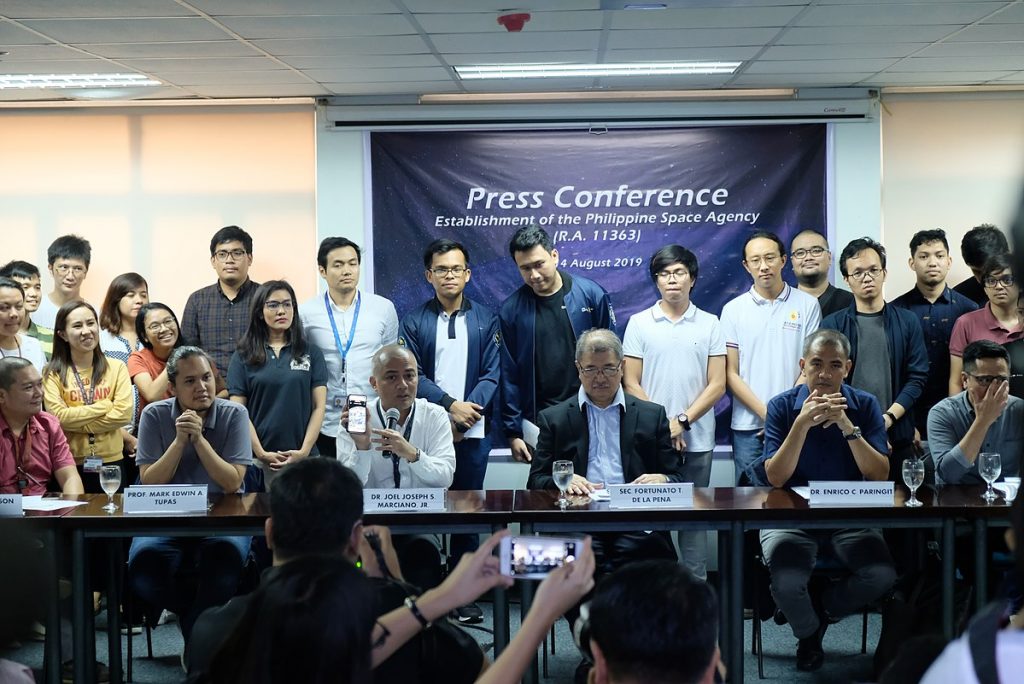
The unified space agency is defined by the Philippine Space Act (Republic Act No. 11363) which was signed into law on August 8, 2019, by President Rodrigo Duterte, intended to manage and operate the decentralized space program of the Philippine government, which was handled by various agencies of the Department of Science and Technology (DOST).

Department of Science and Technology

The Department of Science and Technology–Science Education Institute (DOST-SEI) launched the first Philippine Space Science Education Program (PSAP) in 2004, to promote science and technology, particularly space science, as a field of study to the Filipino youth.

DepEd and Department of Information and Communications Technology

PSOFT Act includes a provision that mandates that the Department of Education (DepEd), Department of Information and Communication Technology, and Philippine Space Agency shall immediately include in their respective programs the implementation of the proposed law, the funding of which shall be in the annual General Appropriations Act.

The Importance of Space Education in the Philippines

space tech education - streamtech fiber internet
Photo by ThisisEngineering RAEng on Unsplash

Certainly, space tech has many beneficial applications in the Philippines. To also strengthen this, incorporating space technology in the country’s basic education framework is imperative. The following are the importance of space education in the Philippines:

1. Bridge the digital divide among learners

Among the components of the PSOFT Roadmap is the “Universal Access to the Internet for Public Schools”, which aims that all public basic education schools be provided with internet access to help reduce the digital divide among learners and raise the standards of education for all.

2. Establish infrastructure to improve teaching and learning processes

Additionally, the need to build, use and sustain modern infrastructure for providing accessible quality education is a long-standing one.

3. Build a space-enabled economy

“Given the rapid advances in space technologies seen globally, it is imperative that the country take necessary steps in building a future knowledge workforce that can contribute to a space-enabled economy. PhilSA will (help) engage DepEd (Department of Education) in developing, enhancing and strengthening relevant SSTA (space science and technology applications) concepts and practice as one foundational technology to be introduced and sustained in the curriculum,” PhilSA Director General Joel Marciano Jr. told the Philippine News Agency in December.

4. Reduce skills gap

According to Salceda, the global economy has become skills-based and highly interconnected. In fact, most of the global wealth is now information-based. In a presentation I delivered to the Committee on Higher and Technical Education, I argued that knowledge is now the wealth of nations. Our citizens will now have to be able to go toe-to-toe with citizens from other countries,” Salceda said.

He noted that measures of the global competitiveness of Filipino learners show “disappointing” results.

He cited the results of the 2018 Programme for International Student Assessment (PISA) revealing that the Philippines scored 353 in Mathematics, 357 in Science, and 340 in Reading, all below the average of participating OECD countries.

“This is the reason we need to invest in education reform and infrastructure,” Salceda said.

He added that the Philippines is a country of diplomas, but not necessarily of skills. This is also untenable in a skills-based global economy. He further emphasized the need to change this with meaningful education reforms to improve skills.

Learn Space Tech with Streamtech!

Streamtech Fiber Internet

Indeed, the future is now. Thus, fast, reliable fiber internet is essential in exploring space technologies. Streamtech is one of the newest internet providers in the Philippines. Indeed, it offers dedicated fiber internet access, leased line, and WiFi services to subscribers in the franchise areas. This is powered by its own fiber-optic backbone link. Through its fiber internet plans, subscribers can rest assured of having a fast and reliable connection, thereby, seamless access to online contents of their needs.

Not only does it offer a fast fiber internet connection, but it also connects you to your favorite television channels. Its partnership with Planet Cable also allows you to subscribe to a cable-internet bundle. So, subscribe now to the best internet provider in the Philippines. You may also visit the Streamtech official FB Page to learn more.